
5 Best Caulk for Cabinet Doors for Smooth Seams
GE Advanced Silicone Caulk Sealant is the top pick and the best caulk for cabinet doors for most buyers because its flexible silicone seal handles small shifts and moisture without cracking. It is especially useful around painted wood or laminate cabinet edges, where a rigid filler can fail.
This guide is for homeowners repairing gaps around doors, frames, and trim, plus anyone choosing a sealant for a kitchen refresh. Material compatibility matters most: silicone may not accept paint, while some acrylic formulas are easier to color-match. Tube size also affects waste and application speed, especially for a few small repairs. The five picks below are ranked with clear reasons and honest drawbacks for each, so you can match the formula to your cabinet surface and repair size.
Quick Comparison
| # | Product | Best For | Price | |
|---|---|---|---|---|
| 1 | GE Advanced Silicone Caulk Sealant | Bathrooms needing waterproof seals | $7.97 | View → |
| 2 | Gorilla 100% Silicone Sealant Caulk | DIYers sealing varied household surfaces | $10.32 | View → |
| 3 | GE Advanced Silicone Caulk for Window & Door | Homeowners sealing window and door frames | $10.49 | View → |
| 4 | Gorilla Ultimate Sealant Window & Door Caulk | Exterior openings needing weather protection | $10.29 | View → |
| 5 | GE Supreme Paintable Silicone Caulk | Painters needing paint-ready flexible caulk | $13.78 | View → |
5 Caulk Picks for Cabinet Doors
These options are ranked by finish quality, flexibility, and ease of application, counting down to the top pick.
5. GE Supreme Paintable Silicone Caulk

Best for: Indoor window and door repairs
GE Supreme Paintable Silicone Caulk comes in one 9.5 fl oz cartridge. Its hybrid formula combines silicone’s waterproof sealing with an acrylic-latex-style surface that accepts paint. That makes it useful around windows, doors, kitchens, and bathrooms where moisture and small movements can open ordinary gaps.
The sealant stays flexible instead of shrinking or cracking as temperatures change. GE lists 40% more flexibility than Class 25 sealants and seven times stronger adhesion than its Silicone 1 sealant. It becomes paint-ready and water-resistant after about 30 minutes, which can shorten repair time. The neutral-cure formula also produces less odor than many solvent-heavy sealants, making indoor application more comfortable. Still, the 30-minute timing can vary with bead size, temperature, humidity, and surface conditions. The white color suits many trim and frame repairs, but it may not match every painted surface.
Pros
- Silicone-based waterproofing helps block moisture around windows, doors, kitchens, and bathrooms.
- Remains flexible through temperature changes, with claims of 40% more flexibility than Class 25 sealants.
- Paint-ready and water-resistant in about 30 minutes under suitable conditions.
Cons
- One 9.5 fl oz cartridge may not cover a large project, especially with wide or deep joints.
- Cured silicone caulk can be difficult to remove, so careful application and surface preparation matter.
4. Gorilla Ultimate Sealant Window & Door Caulk

Best for: Fast exterior window and door repairs
Gorilla Ultimate Sealant is a white, 9 oz cartridge caulk for sealing windows, doors, frames, and other exposed surfaces. It is designed as a higher-performance alternative to traditional 100% silicone, with flexibility that allows the bead to expand and contract as surfaces shift. That makes it suitable for both indoor and outdoor repair work.
The standout feature is its quick moisture resistance. The sealant is rated to handle rain or water after 15 minutes, which can help when weather changes during an installation. It can also be painted after 30 minutes, so white may not be the final color you need. Gorilla claims the formula resists shrinking and cracking, while its waterproof design supports long-term use in wet areas. Lifetime mold and mildew resistance is useful around bathrooms, exterior trim, and other humid locations. At $10.29, it costs more than many basic caulks, but the shorter wait times may justify the price for time-sensitive repairs.
Pros
- Ready for rain or moisture after 15 minutes.
- Paintable after 30 minutes for color-matched trim.
- Flexible, waterproof formula resists shrinking and cracking.
Cons
- The 9 oz cartridge may be more material than needed for small touch-ups.
- White is the supplied color, so painted finishes may require extra work.
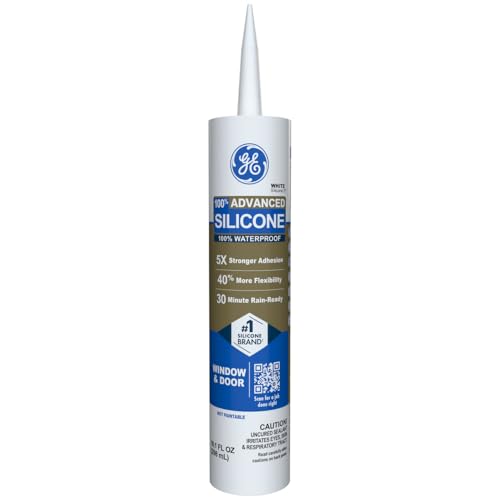
3. GE Advanced Silicone Caulk for Window & Door
Best for: Drafty window and door repairs
GE Advanced Silicone Caulk is a white, 10 fl oz cartridge made for sealing window and door gaps. Its silicone formula creates a waterproof, weatherproof barrier for areas exposed to rain and changing temperatures. At $10.49, it offers a practical option for small repairs and routine maintenance.
The sealant stays flexible as surfaces shift. GE claims 40% more flexibility than Class 25 sealants and five times stronger adhesion than its Silicone 1 formula. It becomes rain resistant after 30 minutes, which helps when weather changes during a project. The neutral-cure formula has low odor, making it more comfortable for indoor work than many harsher sealants. It also resists shrinking and cracking, with 10-year product protection listed by the manufacturer. Keep in mind that rain resistance after 30 minutes does not mean the bead has fully cured.
Pros
- Waterproof and weatherproof protection suits exterior window and door joints.
- Flexible silicone handles surface movement and temperature changes without shrinking or cracking.
- Low odor and neutral curing make indoor application more comfortable.
Cons
- The 10 fl oz cartridge requires a compatible caulk gun, adding a tool requirement for first-time buyers.
- White silicone is difficult to paint after curing, so the finished bead may not match every frame or wall color.
2. Gorilla 100% Silicone Sealant Caulk

Best for: Sealing exterior window and door gaps
Gorilla Window & Door Silicone Sealant is a 10-ounce cartridge of white, 100% silicone caulk. It is made for window and door frames, siding, trim, vents, attics, basements, and other indoor or outdoor gaps. The waterproof formula helps block rain and moisture while handling sun exposure and temperature changes.
Its 30-minute water exposure time is useful when weather could change soon after application. The sealant reaches full cure in 24 hours. It meets ASTM C-920, Class 35 standards and is designed to stay flexible without shrinking, cracking, or breaking down over time. The white finish suits many common trim and frame colors, though it may not match every surface. Gorilla also backs this product with a Lifetime Guarantee, which adds support for long-term repair work.
Pros
- 100% silicone provides a waterproof seal for indoor and outdoor use.
- Handles sunlight, rain, and temperature changes around windows and doors.
- Flexible Class 35 formula resists shrinking and cracking after curing.
Cons
- The single 10-ounce cartridge may not cover several large openings or a full renovation.
- White is the only listed color, so it may require painting or color matching around darker trim.
1. GE Advanced Silicone Caulk Sealant

Best for: Small window and door repairs
GE Advanced Silicone Caulk comes in a 2.8 fl oz white tube for sealing gaps around windows and doors. Its 100% silicone formula resists water and weather, making it suitable for areas exposed to rain, humidity, sunlight, and freezing temperatures. The tube costs $7.97, but its limited size fits minor repairs better than full-room projects.
The sealant stays flexible as surfaces shift with temperature changes. GE states that it offers 40% more flexibility than Class 25 sealants and five times stronger adhesion than its Silicone 1 sealant. It becomes water-resistant after 30 minutes, although that does not mean the bead has fully cured. The neutral-cure formula has low odor for indoor work, and the product includes 10-year protection. Its resistance to shrinking and cracking should help maintain a clean seal over time.
Pros
- 100% silicone construction handles water and outdoor weather.
- Remains flexible through temperature changes and surface movement.
- Becomes water-resistant in 30 minutes for quicker project turnaround.
Cons
- The 2.8 fl oz tube covers only small repairs or short bead runs.
- White silicone may not match every frame, wall, or trim color.
Buying Guide
Paintability is the most important factor for cabinet door gaps. A paintable acrylic latex or siliconized acrylic formula blends with the finish, while 100% silicone usually rejects paint.
- Formula: Choose acrylic latex or siliconized acrylic for painted cabinets. Avoid 100% silicone unless you want a permanent, unpainted bead.
- Flexibility: Look for a label stating “flexible” or “crack-resistant.” This matters around doors that open, close, and shift slightly.
- Gap size: Use caulk for gaps up to about 1/8 inch wide. For wider openings, add foam backer rod or use a suitable filler first.
- Drying time: Allow at least 2 to 4 hours before light handling, then follow the label before painting. Many products need 24 hours to cure fully.
- Application and color: A 10.1-ounce cartridge fits a standard caulk gun and usually covers several cabinet doors. Pick white, clear, or a tint close to the final paint color.
If you cannot have every feature, prioritize a paintable, flexible formula that matches the cabinet’s finish.
Frequently Asked Questions
How do I choose caulk for painted cabinet doors?
Choose a paintable acrylic-latex caulk with low shrinkage for most painted cabinet doors and trim. Pick a product labeled paintable, then smooth it into gaps under 1/4 inch before priming and painting. One 10-ounce cartridge usually covers many small joints, but coverage varies with bead size.
What caulk should I use for gaps around cabinet door panels?
For painted wood or MDF, use a paintable acrylic-latex or siliconized acrylic formula. It adheres to common surfaces and can be sanded lightly after curing, while remaining flexible enough for small seasonal movement. Keep the bead narrow, around 1/8 inch, so the repair disappears under paint.
Can I use silicone caulk on cabinet doors?
You can use silicone on joints that need water resistance, but most silicone caulks cannot be painted. That makes it better for a sink-side cabinet gap than a visible door seam. Choose clear or color-matched silicone, and allow about 24 hours before exposing the bead to water.
Are paintable caulks safe for kitchen cabinet doors?
Yes, paintable acrylic-latex caulks are generally suitable for kitchen cabinet doors when applied to clean, dry surfaces. Use them to fill cracks and fixed trim joints, not to glue moving doors or replace failed hinges. After the caulk cures, lightly sand rough edges and apply two thin paint coats.
Conclusion
GE Advanced Silicone Caulk Sealant is the top pick for homeowners who want a flexible, water-resistant seal around cabinet doors and can accept a less paint-friendly finish. If your priority is matching painted trim or touching up the bead later, choose a paintable acrylic-latex caulk instead, since it accepts paint more readily and usually offers easier cleanup with water. Before buying, double-check the tube size, the label’s compatibility with your cabinet material and surrounding surfaces, the quantity needed for the project, and the current price, since package sizes and listings can change. Also review the manufacturer’s cure time and surface-preparation directions before starting, since those details affect the final bond and appearance.
