
7 Best Heat Lamp for Hedgehog on a Budget
For most buyers, the LUCKY HERP 150W Ceramic Heat Emitter is the best heat lamp for hedgehog because it provides steady warmth without adding visible light to the enclosure. That matters for nocturnal pets, which need a dark sleep cycle. Its ceramic design fits a compatible heat-rated socket, but the fixture and thermostat still need careful selection.
This guide is for owners choosing a heat source for a new habitat or replacing an underperforming bulb. Focus first on wattage matched to enclosure size, then on thermostat control, socket material, and a protective guard. Ceramic emitters can reach high temperatures, so safe clearance matters as much as output. The seven picks below are ranked with clear reasons and honest drawbacks for each, helping you compare warmth, setup demands, and ongoing cost.
Quick Comparison
| # | Product | Best For | Price | |
|---|---|---|---|---|
| 1 | LUCKY HERP 150W Ceramic Heat Emitter | High-wattage nighttime heating | $15.99 | View → |
| 2 | TFNN Reptile Heat Lamp with Clamp | Clamp-mounted beginner setups | $18.99 | View → |
| 3 | REPTI ZOO Reptile Light Fixture with Dimming Thermostat | Precise temperature control | $39.99 | View → |
| 4 | DaToo Ceramic Reptile Heat Lamp | Compact ceramic heat sources | $5.79 | View → |
| 5 | ReptiKing 5.5-Inch Reptile Light Fixture | Small enclosure lighting | $18.89 | View → |
| 6 | REPTI ZOO Reptile Light Fixture with Dimming Thermostat | Backup thermostat-controlled heating | $44.99 | View → |
| 7 | DaToo Ceramic Reptile Heat Lamp | Budget-friendly ceramic heating | $7.99 | View → |
7 Top Heat Lamps for Hedgehogs
These ranked picks count down to the top choice, with each heat lamp judged for warmth, safety, control, and hedgehog-friendly use.
7. DaToo Ceramic Reptile Heat Lamp

Best for: Reptiles needing nighttime warmth
The DaToo Ceramic Reptile Heat Lamp is a two-pack of 150W ceramic heat emitters with standard E26 bases. They produce heat without visible light, so they can warm a terrarium overnight without adding a bright glow. The ceramic body uses a high-temperature, moisture-resistant material, while the nickel-chrome resistance wire is rated for long-term heating. DaToo lists a service life of up to 10,000 hours.
Each bulb uses a flat spiral heating design. The company states that heat begins rising within 10 seconds and reaches its rated temperature in about four minutes. These emitters can suit lizards, snakes, turtles, hedgehogs, chicks, and other animals that need supplemental warmth. They also work for some dog or cat warming setups, but the enclosure, distance, and thermostat still matter. Use a quality ceramic socket, keep the bulb away from pets, and monitor surface temperatures with a thermometer. At $7.99 for two bulbs, the pack offers a low-cost backup or replacement option.
Pros
- No visible light helps maintain a darker nighttime enclosure.
- Two 150W bulbs provide a spare or allow separate setups.
- E26 bases fit many compatible ceramic lamp holders.
Cons
- A 150W emitter may produce too much heat for small tanks or poorly ventilated enclosures.
- The bulbs need a suitable ceramic socket, safe clearance, and temperature control. A basic lamp holder alone may not prevent overheating.
6. REPTI ZOO Reptile Light Fixture with Dimming Thermostat

Best for: Reptile keepers needing controlled heat
The REPTI ZOO fixture combines an 8.5-inch deep dome with a dimming thermostat for terrarium heat lamps. Its E26 ceramic socket supports bulbs up to 150 watts. The polished aluminum reflector directs lamp output, while ventilation holes on top help release heat. At $44.99, it offers a thermostat and fixture in one setup. ETL certification adds a useful safety check, though buyers should still follow clearance and bulb instructions.
The thermostat uses a temperature probe and a PID heating mode to adjust power more gradually than a basic on/off controller. Its control range runs from 68°F to 122°F, or 20°C to 50°C. An LED screen shows both the current ambient temperature and the target setting. You can switch between Celsius and Fahrenheit. Setup involves placing the probe inside the enclosure, selecting a temperature, and connecting the lamp. The reflective shade may help direct UVA and UVB output from a compatible bulb, but the fixture itself does not replace dedicated UVB lighting.
Pros
- Supports heat bulbs up to 150 watts through an E26 ceramic socket.
- Dimming control can reduce abrupt temperature and brightness changes.
- Digital display shows both measured and selected temperatures.
Cons
- The 8.5-inch dome needs adequate clearance above the terrarium.
- Buyers must confirm that their bulb provides the required UVB output and fits the 150-watt limit.
5. ReptiKing 5.5-Inch Reptile Light Fixture

Best for: small reptile enclosures needing overhead heat
The ReptiKing Reptile Light Fixture is a 5.5-inch dome designed for basking bulbs, heat lamps, and ceramic heat emitters. Its ceramic E26 socket supports bulbs up to 150 watts, giving keepers several heating options. The fixture costs $18.89 and uses a UL-listed socket, which adds a useful safety credential for a powered enclosure accessory.
Its deep aluminum reflector directs light downward and may help increase the lamp’s UVA output compared with a shallow shade. A 180-centimeter, or 6-foot, power cord gives extra reach around many stands and habitat setups. The cord-mounted on/off switch also keeps daily control within reach without unplugging the fixture. The dome fits common reptile bulbs, including daytime basking spots, natural-light bulbs, night heat bulbs, and ceramic emitters. It is a practical single-lamp holder, not a complete lighting system.
Pros
- The ceramic E26 socket supports heat sources up to 150 watts.
- The 5.5-inch aluminum reflector directs light toward the enclosure.
- The 6-foot cord and inline switch make placement and daily control easier.
Cons
- The 150-watt limit rules out higher-powered bulbs and emitters.
- Only one bulb socket is provided, so separate heat and UVB lamps need another fixture.
4. DaToo Ceramic Reptile Heat Lamp

Best for: Reptile tanks needing nighttime warmth
The DaToo Ceramic Reptile Heat Lamp is a 150W ceramic heat emitter with a standard E26 base. It produces heat without visible light, so it can warm a terrarium overnight without adding a bright bulb. The flat spiral heating design reportedly starts warming within 10 seconds and reaches its rated temperature in about four minutes.
The high-strength ceramic body is designed to resist cracking, moisture, and high temperatures. A nickel-chrome resistance wire supports continuous operation, with a claimed service life of up to 10,000 hours. This warmer can suit lizards, snakes, turtles, hedgehogs, chicks, and other animals that need supplemental heat. At $5.79, it costs little upfront, but proper setup matters. Use it with a quality ceramic E26 socket, keep it away from direct contact with the animal, and monitor the enclosure temperature with a separate thermometer. The bulb does not include a fixture or thermostat based on the provided details.
Pros
- Produces heat without visible light, making it suitable for nighttime use.
- Uses a standard E26 base for compatibility with many ceramic lamp fixtures.
- Ceramic construction and a claimed 10,000-hour lifespan support repeated use.
Cons
- The 150W output may use substantial electricity and could overheat smaller enclosures.
- It needs a suitable ceramic socket and separate temperature controls for safer, more precise operation.
3. REPTI ZOO Reptile Light Fixture with Dimming Thermostat

Best for: reptile keepers needing controlled heat
This REPTI ZOO setup pairs a 5.5-inch-deep dome fixture with a dimming thermostat for one reptile heat lamp. Its E26 ceramic socket supports bulbs rated up to 100 watts. The aluminum reflector directs light into the enclosure, and the listing says it can improve UVA and UVB output. The bulb itself is not included, so you must buy one separately.
A probe measures terrarium temperature while the controller adjusts lamp power within a 68°F to 122°F, or 20°C to 50°C, range. The digital display shows current and target temperatures, with Celsius and Fahrenheit options. Ventilation holes help release heat from the dome. ETL certification adds a useful safety check. The dimming system also reduces abrupt lamp brightness changes compared with basic on-off thermostats. At $39.99, this package combines the fixture and controller in one purchase, which can simplify setup for a single enclosure.
Pros
- Dimming control can keep temperatures steadier than simple on-off thermostats.
- The 5.5-inch dome uses a reflective aluminum shade and E26 ceramic socket.
- The probe and digital screen show current temperature and the target setting.
Cons
- The heat bulb is not included, so the finished setup costs more than $39.99.
- The 100-watt limit may restrict bulb choices for large or cold enclosures.
2. TFNN Reptile Heat Lamp with Clamp

Best for: Small reptile enclosures needing timed heat
The TFNN Reptile Heat Lamp is a clamp-on fixture for turtles, lizards, bearded dragons, and other small animals. It includes two bulbs, rated at 50W and 75W, plus a metal shade and heat-resistant metal clip. The 15.8-inch stainless steel swan neck rotates 360 degrees, so you can change the lamp’s angle and distance without moving the enclosure.
Its strongest feature is the built-in cycle timer. You can select 3-, 6-, or 12-hour intervals and adjust the light across three brightness levels with the plus and minus buttons. The lamp provides UVA and UVB output for basking and calcium support, while the bell-shaped shade spreads light across a broader area than a narrow fixture. That may help cover more than one small habitat, though actual coverage depends on placement and enclosure size. The clamp gives you a flexible mounting option, and the $18.99 price keeps the setup affordable.
Pros
- Includes both 50W and 75W bulbs, giving you two heating options.
- A 15.8-inch, 360-degree adjustable neck supports flexible lamp positioning.
- Three timer settings and three brightness levels simplify daily light schedules.
Cons
- No thermostat or temperature sensor is listed, so you must monitor enclosure temperatures separately.
- The clamp and bell-shaped shade may take up noticeable space around small tanks or pet boxes.
1. LUCKY HERP 150W Ceramic Heat Emitter
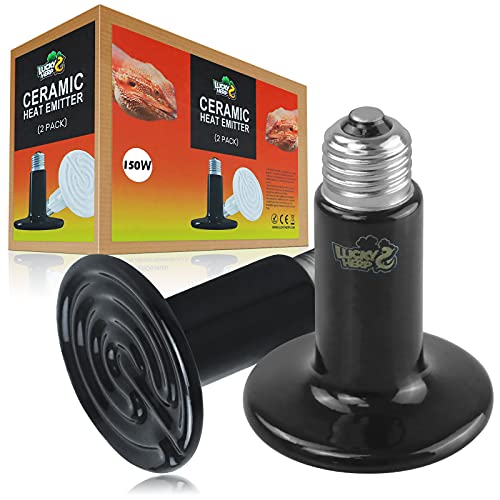
Best for: Nighttime reptile enclosure heating
The LUCKY HERP 150W Ceramic Heat Emitter is a two-pack of screw-in heating bulbs for reptiles, amphibians, chickens, dogs, and cats. Each bulb fits a standard E26 socket and runs at 120 volts. It produces heat without visible light, so it can warm an enclosure overnight without adding brightness that may disturb sleep. At $15.99, the pair costs about $8 per bulb.
According to the listed specifications, the emitter starts warming within 10 seconds and reaches its rated temperature in about four minutes. Its thick ceramic housing is designed for repeated heat exposure, with a claimed service life of up to 10,000 hours. This suits animals that need warmth without a glowing basking spot. Setup requires a high-quality ceramic holder, at least 30 centimeters of distance from the animal, and limited on/off cycling. The bulbs do not replace a thermostat, thermometer, or daytime lighting setup.
Pros
- Produces heat without visible light, making it suitable for overnight use.
- Two 150W bulbs provide a spare or allow heating two enclosures.
- Standard E26 compatibility makes installation straightforward with a suitable socket.
Cons
- Requires a ceramic lamp holder, since ordinary plastic fixtures may not handle the heat safely.
- A 150W bulb can use substantial electricity during extended operation and may create excessive heat in small enclosures.
Buying Guide
Temperature control matters most when choosing a heat source for a hedgehog. A thermostat helps keep the enclosure near 72–80°F and reduces burn, overheating, and dangerous temperature swings.
-
Thermostat compatibility: Choose a lamp or ceramic heat emitter that works with an external thermostat. Set the probe at hedgehog height, away from the direct beam, and use a model rated for the heater’s wattage.
-
Suitable heat output: Start with 50–100 watts for many indoor habitats, then adjust based on room temperature and enclosure size. Never select wattage without checking the manufacturer’s guidance.
-
Safe mounting: Pick a fixture with a ceramic socket, metal guard, and secure clamp or bracket. Keep the heater outside the habitat when possible, with at least 12 inches between the bulb and bedding.
-
Light type: A ceramic emitter provides heat without visible light, which supports a normal day-night cycle. Avoid bright red or white bulbs running overnight.
-
Temperature monitoring: Use two digital thermometers, one on each side of the enclosure. Replace batteries yearly, and check readings at least twice daily during setup.
If you cannot get every feature, prioritize thermostat control and accurate temperature monitoring over extra wattage or decorative design.
Frequently Asked Questions
How warm should a hedgehog’s heat lamp keep the enclosure?
A heat lamp should keep a hedgehog’s enclosure around 72–80°F (22–27°C), with a cooler area available. Place a digital thermometer near the sleeping zone and check it daily, since temperatures can vary between the warm side and the opposite corner.
What type of heat source is safest for a hedgehog?
A ceramic heat emitter paired with a thermostat is generally the safest heat source for a hedgehog enclosure because it provides warmth without adding bright nighttime light. Common emitters come in 50- and 100-watt sizes, but the thermostat, enclosure size, ventilation, and room temperature determine the correct option.
Can I use a red or colored bulb for hedgehog heat?
A colored bulb can provide heat, but a ceramic heat emitter is usually preferable for nighttime warmth because it produces no visible light. If you use a light-producing lamp, keep the enclosure on a consistent day-night schedule and monitor the warm and cool areas with separate digital thermometers.
Are heat lamps safe without a thermostat?
No, a heat lamp should not run without a thermostat because temperatures can rise quickly and cause overheating or burns. Use a thermostat rated for the lamp’s wattage, plus a wire guard that prevents nose-to-bulb contact; position the probe at bedding height, not against the enclosure wall.
Conclusion
LUCKY HERP 150W Ceramic Heat Emitter is the top recommendation for hedgehog owners who need steady, light-free warmth and have a fixture rated for its wattage. If your priority is tighter temperature control or a smaller enclosure, choose an adjustable thermostat-compatible setup instead, since wattage alone does not regulate the habitat. Before buying, double-check the enclosure size, fixture and thermostat compatibility, the quantity needed for your setup, and the current price, since listings and pack sizes can change. Keep the emitter outside the animal’s reach, monitor the warm and cool zones with reliable thermometers, and follow the enclosure manufacturer’s clearance guidance. A safe setup matters as much as the bulb.
