
5 Best Layout Blinds for Big Guys for Long Hunts
For shoppers comparing the best layout blinds for big guys, the Guide Gear RT Max-7 Layout Ground Blind is the top pick for most buyers. Its main advantage is generous interior room, giving larger hunters more space to sit, turn, and keep essential gear close without feeling cramped. It is a practical choice for ground hunting when comfort matters as much as concealment.
This guide is for bigger-bodied hunters who need a blind that fits both their frame and equipment. The key factors are usable interior space, seat clearance, fabric strength, weather coverage, and packed size for field carry. Capacity labels can help, but floor layout matters more than a large number on the box. The five picks below are ranked with clear reasons and honest drawbacks for each.
Quick Comparison
| # | Product | Best For | Price | |
|---|---|---|---|---|
| 1 | Guide Gear RT Max-7 Layout Ground Blind | Budget-Minded Field Hunters | $149.99 | View → |
| 2 | ALPS OutdoorZ Legend Layout Blind | Comfort-Focused Waterfowl Hunters | $349.99 | View → |
| 3 | Rogers Goosebuster 2.0 Layout Blind | Goose Hunters Needing Extra Space | $149.99 | View → |
| 4 | Final Approach Express Low-Profile Layout Blind | Mobile Hunters In Crop Fields | $139.99 | View → |
| 5 | HUNTRITE RT Max-7 Layout Blind | Hunters Wanting Quick Setup | $98.99 | View → |
5 Layout Blind Picks for Big Guys
These picks are ranked by fit, comfort, and support, counting down from fifth place to the top choice.
5. HUNTRITE RT Max-7 Layout Blind

Best for: Mobile hunters on wet ground
The HUNTRITE Lightweight Layout Blind is a portable hide for duck, goose, and other waterfowl hunts. It weighs 10 pounds and packs down to 25 by 19 by 5 inches, making it easier to transport between spots than a larger framed blind. Its waterproof bottom helps block moisture from wet soil, snow, or shallow puddles. The camouflage pattern is designed for low-profile field use, though the blind still needs suitable natural cover around it.
Comfort is the main feature here. A large padded seat supports long waits, while the adjustable backrest lets you change your sitting position. The backrest uses powder-coated tubular steel, which should provide a firmer structure than a fabric-only design. A magnetic top closure allows quieter opening than a zipper, a useful detail when birds are close. At $98.99, this blind targets hunters who want basic shelter, padding, and packability without moving to a heavier permanent setup.
Pros
- Waterproof bottom helps protect against damp ground.
- Padded seat and adjustable backrest support extended hunts.
- Packs to 25 by 19 by 5 inches for transport and storage.
Cons
- The 10-pound weight may feel heavy during long walks across fields or marshes.
- Its compact packed size is still fairly bulky for crowded gear bags.
4. Final Approach Express Low-Profile Layout Blind
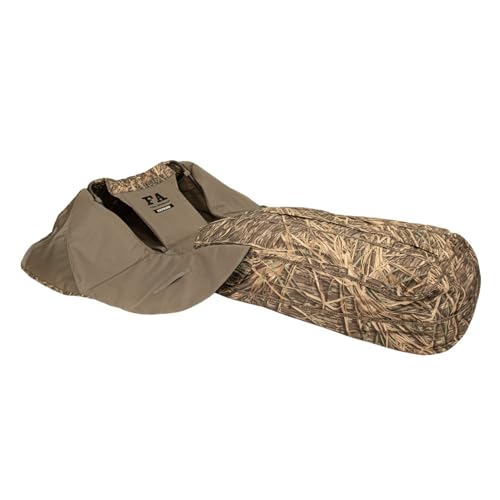
Best for: Waterfowl hunters needing quick field concealment
The Final Approach Express Low-Profile Layout Blind is a lightweight option for hunters who want a simple ground setup. It weighs only 9 pounds, so carrying it from the vehicle to a field or marsh should take less effort than moving a heavier framed blind. Its Original Shadow Grass pattern suits common waterfowl hunting environments, while the low profile helps keep the blind close to the ground. The price is $139.99.
Setup is the main selling point. The blind unfolds and locks into position within seconds, with no pins to handle. It also skips separate door and boot bag frames, which reduces the number of parts that can slow down setup or get misplaced. A rust-free aluminum frame should handle damp hunting conditions better than untreated steel. Still, this is a compact layout blind, not a roomy shelter. Hunters who prefer upright seating, extra storage, or a taller shooting position may find its design restrictive.
Pros
- At only 9 pounds, it is easier to carry into remote fields.
- The frame unfolds and locks in seconds for quick placement.
- Rust-free aluminum avoids the corrosion concerns of steel frames.
Cons
- Its low profile provides less sitting height and interior space than taller blinds.
- The lack of door and boot bag frames means less structured coverage around the entry and feet.
3. Rogers Goosebuster 2.0 Layout Blind

Best for: Mobile field hunters needing low concealment
The Rogers Goosebuster Low-Profile 2.0 Layout Blind is a compact hide for hunters who walk into fields or grassland instead of hauling gear by vehicle. Its 12-inch height keeps the body close to the ground, while the 12-pound weight makes longer walk-ins more manageable. The Original Bottomland pattern adds a traditional woodland look at a $149.99 price.
The strongest feature is the low profile. No-frame doors avoid a raised door structure, which can help keep movement and concealment tight around the blind. The shell uses 600D polyester, a heavy fabric choice suited to repeated field use and rough ground contact. This design favors portability and a small footprint over extra room. Buyers should expect a tight layout rather than a spacious shelter. The no-frame construction may also provide less rigid support than a framed blind, depending on how the doors sit in use.
Pros
- 12-inch height helps reduce the blind’s visible outline in short cover.
- 12-pound weight suits long walk-ins, repositioning, and run-and-gun hunts.
- 600D polyester fabric offers a durable outer material for regular field use.
Cons
- The 12-inch profile leaves limited vertical space, so taller hunters may find the layout cramped.
- No-frame doors can provide less structure than framed doors and may require more careful positioning.
2. ALPS OutdoorZ Legend Layout Blind

Best for: Low-profile dove and duck hunters
The ALPS OutdoorZ Legend is a layout-style hunting blind built around a zero-gravity chair. Instead of sitting directly on wet ground, you stay raised while keeping your profile low. A waterproof tarpaulin floor helps shield both the chair area and hunting gear from damp conditions. The Realtree MAX-7 pattern suits marshes, fields, and other waterfowl settings. At $349.99, it targets hunters who want a more comfortable alternative to basic ground blinds.
The mesh face screen keeps your outline covered while leaving the sky visible, which fits dove hunting and overhead shot angles. A padded headrest supports longer sits, while the cockpit includes zippered flag ports on both sides for waterfowl setups. The rear zippered door opens to the pit storage area, giving you a separate access point for gear. Backpack straps make transport easier when your hands are full. The design has useful hunting-specific details, but it does not list packed dimensions or total weight in the provided specifications.
Pros
- Raised chair design keeps you off wet or cold ground.
- Waterproof tarpaulin floor helps protect gear from moisture.
- Mesh face screen conceals your position without blocking the sky.
Cons
- The listed specifications do not include packed size or weight, making vehicle and backpack planning harder.
- Its low layout format may offer less enclosed coverage than a taller, conventional ground blind.
1. Guide Gear RT Max-7 Layout Ground Blind

Best for: Low-profile waterfowl hunters adding natural cover
At $149.99, the Guide Gear Layout Camo Ground Blind is built for duck, goose, and turkey hunters who want a ground-level hide. Its 300-denier camo shell helps block light rain, while the weatherproof PVC bottom separates you from wet soil, mud, and dirt. The steel frame is designed for repeated outdoor use, and double stitching at stress points helps reduce tear risk.
Its strongest feature set focuses on concealment and field comfort. One hundred stubble straps give you plenty of attachment points for local grass or brush. A shoulder strap makes the blind easier to carry, while built-in lumbar support adds back cushioning during long waits. Zippered flag access and pop-up doors let you reach equipment or prepare for a shot without fully opening the blind. The shell is labeled waterproof, but no packed size or total weight is provided, so transport needs are hard to judge before purchase.
Pros
- 300-denier shell and PVC bottom help protect against damp ground and weather.
- One hundred stubble straps let hunters add natural vegetation.
- Lumbar support, pop-up doors, and a flag port improve field usability.
Cons
- The listing does not provide packed dimensions or total weight.
- A steel frame may carry more weight than comparable aluminum designs.
Buying Guide
The most important factor is usable interior space. A wider, longer layout blind lets larger hunters sit, turn, and draw a shotgun without pressing against the frame.
- Interior dimensions: Look for at least 40 inches of shoulder width and 84 inches of interior length. Extra knee room matters if you wear insulated bibs.
- Door and lid opening: Choose a blind with a 24-inch or wider entry. A large, hinged lid makes getting in and out easier, especially on frozen ground.
- Seat support: Prioritize an adjustable seatback with firm padding and at least three recline positions. A raised seat should support your back without forcing your knees upward.
- Frame strength: Pick a steel or reinforced aluminum frame with a 300-pound or higher published user limit. Avoid thin bars that flex when you shift position.
- Weight and concealment: A 20- to 30-pound blind offers a practical balance for field carry. Look for a 3D grass system, multiple brush loops, and fabric in muted field colors. A packed length under 50 inches fits more vehicle trunks.
If you cannot get everything, prioritize interior width and seat support, since poor fit becomes uncomfortable during a long hunt.
Frequently Asked Questions
How much room should a layout blind have for a larger hunter?
A larger hunter should choose a layout blind with a wide footwell, broad shoulders, and enough length to sit without pressing against the frame. Look for interior widths around 40 inches or more, plus a 90-inch length when possible. A raised seat back and adjustable headrest can also reduce knee and shoulder pressure.
What features make a layout blind comfortable for big guys?
Models with a wide opening, strong frame, and adjustable backrest usually work best for bigger bodies. Prioritize a 40-inch-plus interior, reinforced support bars, and a cover that opens without catching on your shoulders. Heavier fabric may add weight, but it can handle repeated folding better than thin shell material.
Can a low-profile layout blind fit a larger hunter comfortably?
Yes, a low-profile layout blind can fit a larger hunter if its interior width and seat length match their measurements. Check usable space rather than the outside shell, since thick padding can reduce room by several inches. A blind measuring about 40 by 90 inches inside gives many larger users more space.
Are heavier layout blinds better for big hunters?
Not always; a heavier layout blind may offer stronger support, but interior dimensions matter more than total weight. Compare the listed weight limit, frame tubing, and floor width before buying. A 20-pound blind with a 40-inch interior can be more comfortable than a 25-pound model with cramped shoulder space.
Conclusion
The Guide Gear RT Max-7 Layout Ground Blind is the top choice for larger hunters who need room to sit, shift, and manage bulky layers without feeling boxed in. If your priority is a lighter setup for short walks, choose a compact, low-profile blind instead, since it will pack and carry more easily. Before buying, double-check the blind’s interior size, compatibility with your chair and shooting position, package quantity, and current price. Pay attention to packed dimensions, too, because a roomy shelter can take more space in a truck or gear closet. Also review the return policy and fabric details. A few minutes of checking can prevent an expensive mismatch during hunting season.
